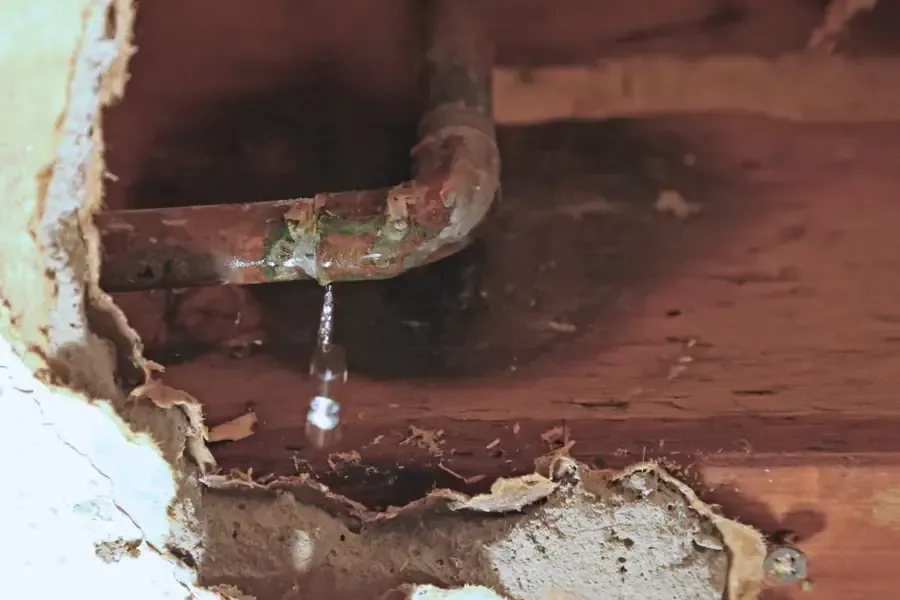
Water service in Thompson's Station comes from the H.B. & T.S. Utility District, and Town wastewater bills are calculated from the water usage information the District sends. That link makes a hidden leak easy to spot on paper and hard to spot in the house. A bill that keeps climbing without any change in how the household lives is often the first sign that water is going somewhere it should not.
Key takeaways
- Town wastewater bills are calculated from water usage reported by the H.B. & T.S. Utility District, so a leak can push both numbers up.
- A quiet meter test, with every tap and appliance off, shows whether water is moving through the house.
- Hidden leaks sit in walls, under sinks, behind appliances and, in a home on a concrete slab, under the floor.
- Finding and fixing the pipe is the plumber's job; extraction, opening wet materials and drying is the restoration team's job.
- Questions about an account or a bill belong with the District and the Town.
Why a Bill Can Be the First Warning
A leak that does not stain a ceiling or flood a floor can still run for weeks. The meter counts every gallon, so the usage number on the bill climbs even when nothing looks wrong.
Much of the housing here is newer construction, with a significant share built after 2000. New fittings and connectors can still develop a slow weep, and a hidden one is only found by looking for it.
- A bill that is higher than recent months with no new reason
- A meter that moves when everyone is away or asleep
- A sound of running water in a quiet house
- A warm spot on a floor, or a damp baseboard that stays damp
The Quiet Meter Test
The test takes a few minutes of attention and no tools. It separates a real leak from a normal increase in use.
Steps for the meter
Stop all water use in the house, including the washer, the dishwasher and the ice maker. Read the meter, wait a while and read it again.
- Check that no tap, hose or irrigation is running
- Write down the meter reading
- Wait without using any water
- Read again; movement means water is flowing somewhere
The toilet check
A toilet can leak silently from the tank into the bowl. A few drops of food coloring in the tank, left alone, show up in the bowl if the flapper is letting water through.
Where Hidden Leaks Hide in Newer Homes
Neighborhoods like Bridgemore Village and Canterbury, both with homes built between 2007 and 2023, and Vale Creek, with homes built between 2015 and 2019, are made of relatively new houses. Even so, fittings, connectors and valves can fail at any age.
In a home that sits on a concrete slab, a pipe under the floor can leak for a long time before anything shows. The signs are warm spots, a sound of running water and damp baseboard.
- Supply connectors under sinks and behind toilets
- Water heater fittings and shutoff valves
- Refrigerator ice maker tubing
- Outdoor spigots and the pipes feeding them
- Pipes in walls and, where the home has a slab, under the floor
What Happens When a Leak Is Found
A leak has two jobs attached to it. One is repairing the pipe, and the other is dealing with the water it put into the house.
Stop and locate
A leak behind a wall or under a floor is located with listening gear and thermal imaging before anything is opened. That keeps the opening small, and the wet area stays easy to map.
The cleanup for slab leak water damage starts from that map.
Dry what got wet
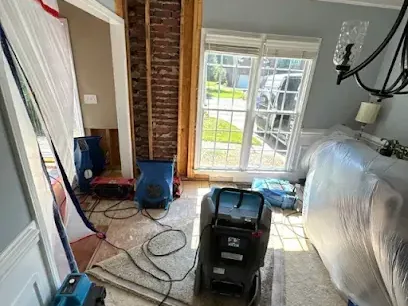
Once the water is stopped, the extraction crew removes standing water, opens wet drywall and baseboard and sets drying equipment. Readings are repeated until the materials return to a normal level, which is how a burst pipe water damage job is closed out.
- Wet drywall and insulation removed where needed
- Flooring lifted when water traveled under it
- Air movers and dehumidifiers run until readings are normal
Keeping the Bill and the Record Clear
Questions about an account or a bill belong with the District and the Town. A plumber's repair record is worth keeping for that conversation.
For the house itself, the records that matter are different. Photos and moisture readings show what the water reached and when the structure was dry.
- The bill showing the usage jump
- The plumber's receipt or repair note
- Photos of the wet area before it was opened
- Written moisture readings from the drying job
When the Bill Is Normal but the House Is Not
A normal bill does not rule out a leak. A small seep that runs only when the washer is on, or a roof or condensate problem, will not show up on the meter at all.
Stains, soft drywall and musty smells are the other warning signs, and they deserve a look even when the numbers look ordinary.
- A new stain on a ceiling or wall
- Paint that bubbles or drywall that feels soft
- Flooring that cups, buckles or sounds hollow
- A musty smell that returns after cleaning
Habits That Catch Leaks Early
A leak found by habit costs far less than one found by a stain. A few minutes each month is enough.
Local service details sit on the Thompson's Station service page, where each type of water loss has its own section.
- Read the meter on a fixed date each month and compare
- Look under every sink and behind the toilets
- Check the ceiling below any bathroom for new stains
- Know where the main shutoff valve is and make sure it turns
A Quick Walk-Through Each Season
A short walk-through every season catches problems while they are still small. It takes a few minutes and needs no tools.
Look at the water heater, the sinks, the toilets, the laundry area and the closet or attic that holds the air handler.
- Water heater: rust, a damp pan or drips
- Sinks: wet cabinet floors or soft wood
- Toilets: rocking or stains at the base
- Laundry: hoses, valves and the floor behind the machines
- Air handler: water in the pan or stains below it
Questions
Does a high water bill always mean a leak?
No. More people at home, a filling pool or heavy irrigation can all raise usage. A quiet meter test separates those from a hidden leak.
Who calculates the wastewater bill?
Town wastewater bills are calculated from water usage information the Town receives from the H.B. & T.S. Utility District.
Will the Town adjust a bill after a leak?
That is a question for the District and the Town. A plumber's repair record is worth keeping for that conversation.
Can a leak under a concrete floor be found without breaking it up?
Listening equipment and thermal imaging can narrow the location before any floor is opened, which keeps the opening small.
Is a hidden leak a plumbing problem or a restoration problem?
Both. The plumber fixes the pipe, and the restoration team removes the water and dries the wall, floor and framing it reached.
What should be kept after a leak is fixed?
The plumber's note, photos of the damage and the written moisture readings from the drying job.