Spring Hill grew from 29,036 residents in the 2010 Census to 50,005 in the 2020 Census, and its subdivisions grew with it. Wades Grove has about 700 homes built from 2006 onward, and Oak Lake Estates has over 450 homes built between 1992 and 2016. In kitchens and laundry rooms across those neighborhoods, washers, dishwashers and refrigerators sit on hoses and tubes that can fail out of sight.
Key takeaways
- Close the appliance's own supply valve, unplug the unit and pull it out gently to see where the water is coming from.
- Hidden water collects under the unit, in the cabinet base, beneath flooring and in the wall behind it.
- Appliance hookups are replaced on their own schedule, so a home's build year says little about the age of the hose behind the washer.
- Water that spread under flooring or into cabinets needs extraction and drying, not just mopping.
- Braided hoses, working shutoff valves and a drain pan cut the odds of a repeat.
Where Appliance Leaks Start
Every appliance that uses water has a few weak points, and most of them sit where no one looks. Knowing where to check turns a surprise into a quick fix.
Washing machines
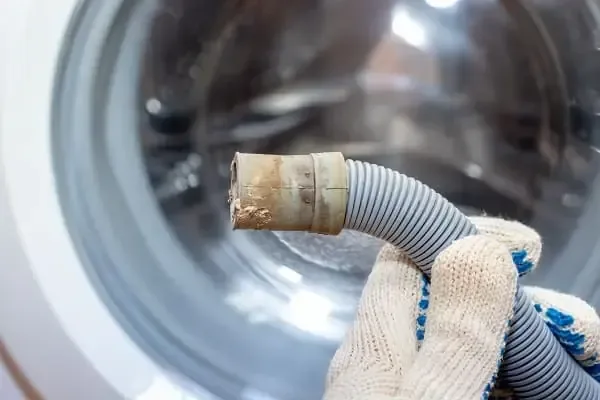
The two supply hoses and the drain hose carry the load. A hose can bulge, crack at the collar or pop off the standpipe during a spin cycle.
Dishwashers
The supply fitting under the sink, the drain connection and the door gasket are the usual sources. A slow leak can run into the cabinet base for a long time.
Refrigerators
Ice makers and water dispensers use thin tubing that kinks, loosens or splits. The water often runs behind the unit and under the flooring before it reaches the open.
Newer Subdivisions, Same Hidden Pattern
Wades Grove and Oak Lake Estates are large neighborhoods, built over many years. Oak Lake Estates alone was built across a stretch from 1992 to 2016.
Appliance hookups are replaced on their own schedule, whatever year a home was built. The age of the neighborhood says little about the age of the hose behind the washer, which is why the checks below matter in every house.
- A hose that has been in place for years may be the weak point
- A replaced appliance may have been hooked up to an old valve
- A moved appliance can kink or loosen a connection
- A closed cabinet hides a drip until the wood swells
Stopping the Water Safely
The first goal is to stop new water, and the second is to keep anyone safe around wet floors and plugs.
- Close the appliance's own shutoff valve; if it will not close, shut the main
- Unplug the unit only if the cord and outlet are dry
- Slide the appliance out slowly to see where the water starts
- Soak up what is reachable with towels and a wet vacuum
- Photograph the wet area before anything is moved
Checking for Hidden Water
A dry-looking floor can sit on a wet subfloor. A moisture meter sees what the eye cannot, and it keeps the cleanup honest.
Most hidden water is found in a short list of spots. Checking them takes only a few minutes.
- The cabinet base and the toe kick below it
- Flooring seams, which cup or lift when the layer under them is wet
- The wall behind the appliance, especially near the baseboard
- The ceiling below if the laundry room or kitchen is on an upper floor
- The next room, where water can travel along the floor
How Extraction and Drying Proceed
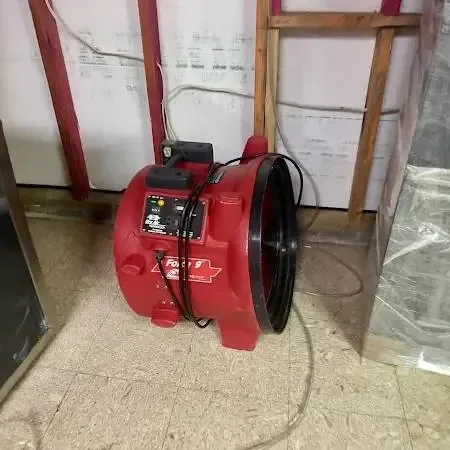
Standing water comes out first, and then the crew decides what dries in place and what comes out. Water extraction takes care of the visible water, and the readings show what remains in the materials.
Cabinet bases and baseboards can often be dried in place with small openings. Flooring that has cupped or soaked through may need to be lifted so the layer beneath can dry, and the full range of appliance leak water damage work follows those readings.
- Toe kicks removed so air can reach the cabinet base
- Baseboard lifted at the wall behind the appliance
- Flooring lifted when water traveled under it
- Air movers and a dehumidifier run until readings return to normal
When a Leak Spreads to the Ceiling Below
A laundry room or kitchen on an upper floor sends water down through the ceiling underneath. The stain can show up in a room far from the appliance.
A bulging ceiling is released at one controlled spot so the water drains into a bucket rather than falling all at once.
- Check the ceiling directly below any upstairs laundry or kitchen
- Look for stains, bubbling paint or a soft section of drywall
- Release trapped water at a single controlled spot
- Keep light fixtures off if water is near them
Preventing the Next Leak
Most appliance leaks repeat in the same few ways, which makes them easy to prevent. A few small changes protect the floor and the cabinet.
Local details for each water loss sit on the Spring Hill service page, and the broader appliance leak cleanup steps apply anywhere a hose fails.
- Replace old rubber hoses with braided ones
- Test the shutoff valves so they turn when needed
- Set a drain pan under the washer and the dishwasher where they allow it
- Look behind the refrigerator and under the sink when cleaning
Keeping Records for the Insurer
A clean record shortens the conversation with an insurer. Photos of the wet area, the failed hose and the dry readings tell the story.
Keep the failed part if possible, since it shows exactly what happened.
- Photos of the failed hose or fitting
- The date the leak was found
- Written moisture readings during drying
- Receipts for any parts or repairs
Questions
How can a small leak behind an appliance cause so much damage?
Slow leaks run for days or weeks into the cabinet base and under the flooring, so the damage is bigger than the visible puddle suggests.
Do older homes leak more than newer ones?
Not necessarily. Appliance hookups are replaced on their own schedule, so the age of the hose matters more than the age of the house.
Should the appliance be unplugged first?
Only if the cord and outlet are dry. If water is near the outlet, switch off the circuit from the panel instead.
Will hardwood or laminate flooring always have to come up?
Not always. Flooring that is only damp on the surface can sometimes be dried in place, while flooring that has cupped or soaked through usually needs to be lifted.
When is the cleanup finished?
When written readings on the cabinet base, subfloor and wall show the materials back at a normal level, not when the surface looks dry.
Can a burst washer hose be a big job?
Yes. A burst hose can release a large volume quickly, so the same extraction and drying steps apply as for any other water loss.