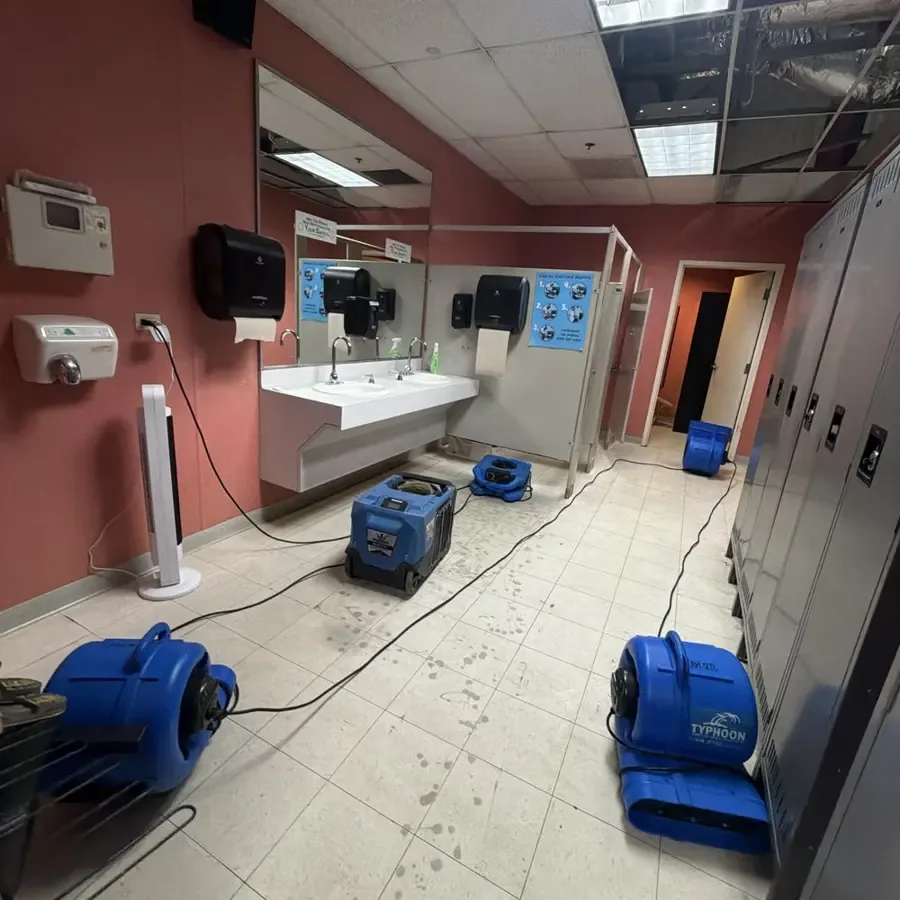
On May 25, 2000, heavy rain in southern Cheatham County caused flash flooding, and three inches of water collected in Pegram City Hall. Three inches sounds small until it covers every square foot of a floor. For the manager of a public building or the owner of a small shop, that depth puts flooring, wall bases, records and equipment at risk all at once.
Key takeaways
- Shallow water in a building still covers the whole floor, so the affected area is large even when the depth is small.
- Shut off power from a dry spot, lift records and stock first, and photograph everything before cleanup.
- Extraction and removal of wet porous materials come before drying equipment.
- A public building answers to a governing body and a small shop answers to an owner and an insurer, so dated photos and readings matter either way.
- Flash flooding moves quickly: in the same 2000 event, Turner's Creek in southern Cheatham County rose as much as 3 feet.
What Happened in Southern Cheatham County in May 2000
Up to six inches of rain fell in Cheatham County on May 25, 2000. At Turner's Creek in southern Cheatham County, water rose as much as 3 feet in 5 minutes.
Nine people were rescued from flooded homes, some from rooftops, and twenty people were isolated by flood waters. Sam's Creek Bridge on State Route 249 was damaged, propane tanks floated down Sam's Creek and a wooden bridge at Dry Creek was destroyed.
- Rain: up to six inches in Cheatham County
- Water in a civic building: three inches in Pegram City Hall
- Rescues: nine people taken from flooded homes
- Damage: bridges at Sam's Creek and Dry Creek
Why Shallow Water Is Still a Big Job in a Building
A building floor is one large surface. Three inches of water across it touches every wall base, door frame and counter in the space.
The depth is only part of the story. What counts is how much material sits at or below that level.
The cost of waiting is not only the floor. Wet wall bases give mold a place to start after a couple of days, and records left in water can be lost for good.
- Flooring across whole rooms or the entire floor plate
- Drywall and wall bases that wick water upward
- Records, supplies and stock stored low
- Outlets and low wiring
- Doors, trim and built in counters
First Steps for a Manager or Owner
In a building, the first decisions protect people and then protect what is inside.
Make the building safe
Switch off power at the panel only if the panel is dry and reachable without stepping into water. If it is not, stay out and bring in an electrician.
Keep staff and visitors out of wet areas until the floor is checked, since wet floors are slippery and hide cords and debris.
Protect what can still be saved
Records, equipment and stock sitting low are the quickest losses and the easiest to prevent.
- Lift files, supplies and stock onto shelves, tables or carts
- Unplug equipment and raise it off the floor
- Photograph every room and the water level before moving anything
- Keep a list of anything that is discarded
Extraction, Drying and Staying Open
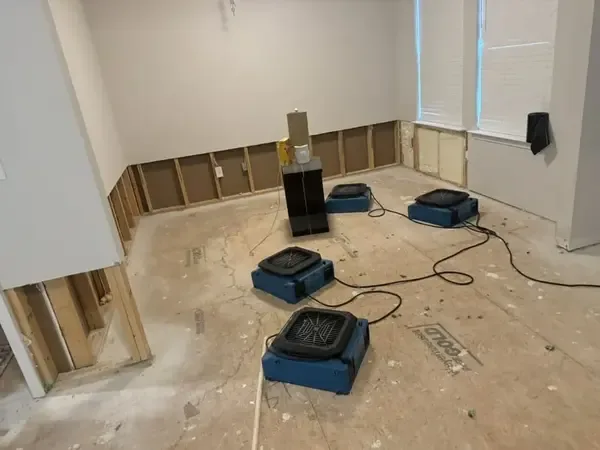
Extraction comes first because every surface stays wet until the standing water is gone. Floor coverings that soaked up the water are cut out and removed, and hard floors are extracted and cleaned.
After that the drying team opens the wall bases, sets air movers and dehumidifiers and takes written readings. A good plan separates wet rooms from dry ones, so part of a building can reopen while the rest dries.
The details of commercial water damage work depend on the size and use of the space.
- Standing water pumped and extracted from the floor
- Wet carpet, pad and soft materials removed
- Wall bases opened and dried with readings logged
- Plastic sheeting used to keep dry rooms usable
Working Around Staff and Visitors
A building that stays in use needs a plan for traffic. Wet floors, loud equipment and plastic barriers change how people move through the space.
A short note to staff about which doors, restrooms and rooms are open prevents accidents and keeps the work on schedule.
- Signs on wet floors and closed rooms
- Cords and hoses routed out of walkways
- Equipment placed so exits stay clear
- One person named to answer questions from staff and visitors
What a Reopening Checklist Looks Like
Reopening is a series of small checks rather than one decision. Each one confirms that people can work safely in the space again.
A walk-through with the drying team after the final readings closes the file.
- Readings back at a normal level on floors and wall bases
- No lingering odor in carpeted or enclosed rooms
- Electrical outlets and equipment checked before use
- Records, stock and supplies returned to shelves in dry rooms first
Records for a Board, an Owner or an Insurer
A public building answers to a governing body, and a small shop answers to an owner and an insurer. In both cases the paperwork is the same kind: dated photos, written readings and a list of what was removed.
Readings taken at the start and repeated until the materials are dry show that the job reached a normal level, which is what a reviewer wants to see.
Getting Ready for the Next Heavy Rain
The 2000 flood is a reminder that heavy rain in southern Cheatham County can turn fast. A few simple habits keep a small building from losing as much next time.
The cleanup after storm and flash flood water is faster when stock and records are already stored high.
- Store records and supplies on shelves rather than on the floor
- Know where the electrical panel and main water shutoff are
- Keep a short list of contacts for the utility, an electrician and the restoration crew
- Check drains and downspouts around the building before a storm
Where the Rest of the Services Fit
A building with a small kitchen, a restroom or an upstairs space can also face leaks, appliance failures and sewage backups. The wider range of commercial water damage services covers those cases and keeps the same record habits from this flood.
Questions
How deep was the water in Pegram City Hall in 2000?
Three inches of water collected in Pegram City Hall during the May 25, 2000 flash flood in southern Cheatham County.
Is three inches of water really a big job?
In a building, yes. The water covers the whole floor, reaches the wall bases and can wick into drywall, so the wet area is large even though the depth is small.
Can a small shop stay open during cleanup?
Sometimes. Dry rooms can be separated from wet ones with plastic sheeting, but wet floors, exposed wiring and dust control come first.
What records matter most?
Dated photos, written moisture readings and a list of removed materials. Together they show what the water reached and when the structure returned to normal.
Should staff try to dry the floor with fans?
Fans alone leave moisture in the wall bases and subfloor. Standing water needs to be extracted first, and drying equipment works best when the readings direct it.
Who should be told when a building floods?
The owner or governing body, the insurer and the utility if service is affected, with dated photos kept from the first walk-through.