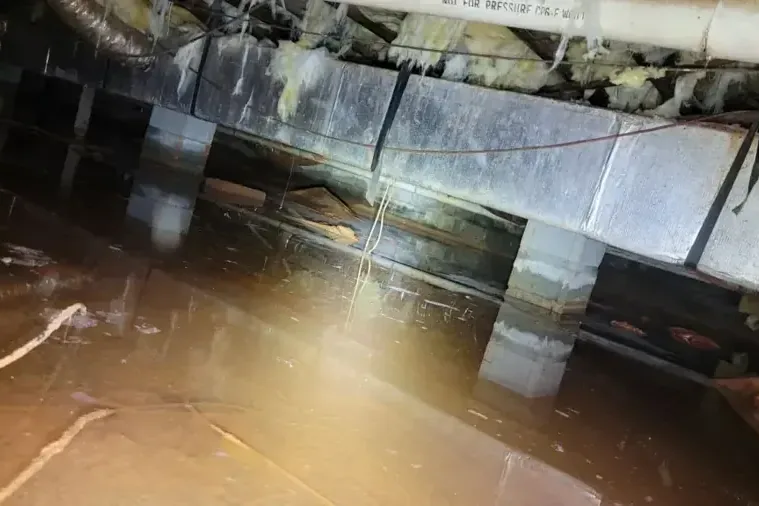
Heavy rain does not always show up as a wet carpet. Sometimes it collects out of sight, under a raised floor, where wet insulation and damp joists go unnoticed for weeks. Rutherford County has many cedar glade state natural areas, places where thin soil sits over limestone, and thin soil gives rain less depth to soak into.
Key takeaways
- Look through the access opening with a flashlight before going in: standing water, drooping insulation and a pooled vapor barrier are the signs.
- Stay out of a crawl space with water near wiring, ducts or a furnace, and shut off the circuit only if it can be reached from a dry spot.
- The first fix is pumping, followed by removal of wet insulation and a drying plan for the joists and subfloor.
- If the water smells like a drain, treat it as a sewage problem, not a rain problem.
- Gutters, downspouts and grading decide where the next rain ends up.
Standing Water or Damp Air: Telling the Difference
A damp crawl space and a flooded one need different responses. The flashlight check from the access opening tells most of the story.
Damp air leaves condensation and a musty smell. Standing water leaves a surface you can see, a pooled barrier or soil that is soft and dark.
- Water with a visible surface on the soil or barrier
- Insulation that sags or has dropped from between the joists
- Dark stains on the joists and the underside of the floor
- A musty smell that gets stronger after rain
- Soft or squishy spots in the floor above
Why Rain Ends Up Under the House
Where soil is thin over rock, rain has less depth to soak into and more of it runs across the ground. It settles in the low spots, and the area under a raised floor is often one of them.
The usual causes are ordinary ones, and several can act together after a long rain.
- Downspouts that empty beside the foundation
- Ground that slopes toward the house instead of away
- A plumbing leak that has been running under the floor
- Gaps or openings in the foundation wall or vents
- Groundwater that rises after days of rain
Safety First: Power and Plumbing
A crawl space holds wiring, ducts and sometimes a furnace, all close to the ground. Water and electricity make that a place to be careful.
Power
If water is near wiring or equipment, stay out and bring in an electrician. Switch off the circuit only if the panel can be reached from a dry spot.
Plumbing
If the water is coming from a supply pipe, close the main valve. If it smells like a drain, treat it as sewage, keep people out and let the crew handle it.
- Do not crawl into standing water
- Do not run a household vacuum on the water
- Photograph the water from the access opening
What the Crew Does
Standing water is pumped out first with a submersible pump and a hose run outside. Pumping runs until the soil is only damp, which can take a while if rain keeps feeding the space.
Wet insulation comes out next, because it holds water against the floor above. The barrier on the ground is checked and lifted where it has trapped moisture.
The details of crawl space water removal and water extraction are the same on every job.
- Water pumped out and discharged away from the house
- Wet insulation bagged and removed
- Vapor barrier checked and lifted where wet
- Joists and subfloor photographed and measured
Drying Joists and Subfloor
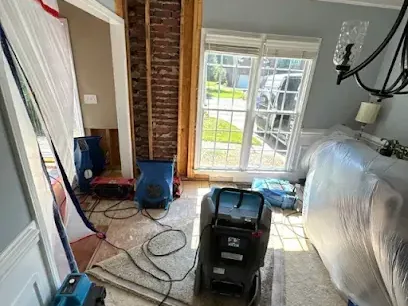
Wood framing stays high on moisture readings long after the puddles are gone. Drying equipment is set in or ducted into the space to pull that moisture out.
Speed matters because damp wood invites mold if it stays wet. Structural drying continues until the written readings drop to a normal level.
- Air movers and dehumidifiers placed in or ducted into the space
- Readings repeated on joists and subfloor
- Equipment removed only when the readings are normal
What Gets Replaced and What Gets Saved
Not every wet material is a loss. Solid wood joists and the subfloor are usually dried and kept, while insulation and soaked barrier material are replaced.
Ducts and wiring that sat in water are checked before the system is turned back on.
- Joists and subfloor: dried and kept once readings return to normal
- Insulation: removed and replaced
- Vapor barrier: cleaned and dried, or replaced
- Ducts and wiring: checked by the right trade
Records That Help Later
Photos from the access opening and written readings show how deep the water was and how long it took to dry. Those records help with the insurer and with a future owner or inspector.
A short log of the dates of each heavy rain and each repair helps spot a pattern.
Keeping Rain Out Next Time
After a wet spell, a few quick checks around the house keep the next storm from finding the same path. The cleanup after storm and flash flood water is faster when the yard already sheds water.
- Extend downspouts away from the foundation
- Clear gutters of leaves and debris
- Fill low spots against the house so the ground slopes away
- Check vents and foundation openings for gaps
- Look into the crawl space after every heavy rain
When the Water Is Not Rain
Not every wet crawl space is a rain problem. A pipe under the floor can leak for weeks, and a sewer backup can fill the space with contaminated water.
City Public Works handles water and sewer pipe problems, so water coming from a pipe outside the home is a report to the city. Inside the house, the main valve stops the supply while the source is found.
Questions
How can I tell standing water from a damp crawl space?
Standing water has a visible surface or leaves a pooled barrier and soft soil. Damp air leaves condensation and a musty smell without a visible puddle.
Is it safe to go into a crawl space with water in it?
Not if water is near wiring, ducts or equipment. Look from the access opening and bring in a professional.
Will pumping alone fix a wet crawl space?
Pumping removes the water, but wet insulation and damp joists still need to be removed and dried, or moisture lingers.
Why does heavy rain collect under some homes more than others?
Grading, downspouts, openings and soil all matter. Where soil is thin over rock, rain has less depth to soak into and more of it runs across the ground.
What if the water smells like a drain?
Treat it as sewage. Keep people out of the space and let the crew contain and clean it, since sewage is handled differently from rainwater.
How often should a crawl space be checked?
After every heavy rain, and once more in a dry spell to confirm the space has dried.