Kingston Springs added municipal sewer service in 1989, using a STEP system, short for Septic Tank Effluent Pumping. In that design, septic tanks owned by homeowners and located on their property hold the solid waste while the wastewater is pumped into the sewer. When sewage ends up back inside a home, the question of where it started can wait; the cleanup cannot.
Key takeaways
- A sewage backup is Category 3 water: treat it as unsafe to touch and keep people and pets out of the area.
- Stop using drains, toilets and appliances that send water down, and keep the area closed off.
- The Public Works page lists separate contacts for sewer issues during business hours and for after hours sewer emergencies.
- Porous materials touched by sewage are removed, hard surfaces are cleaned and treated, and everything is dried with written readings.
- Town officials describe the sewer as aging and under repair, with manholes being rehabilitated to reduce wet weather inflow and infiltration.
How the STEP System Works in Plain Terms
Each home on the system has a septic tank on its own property. The tank holds the solids, and the wastewater is pumped out into the sewer, which the Kingston Springs Public Works Department operates along with the sewer plant.
The design was added in 1989 and helped spur residential growth. It also means a household on the system has a tank on the property as part of the setup.
- Household drains send wastewater to the septic tank on the property
- The tank holds the solid waste
- Wastewater is pumped into the municipal sewer
- The sewer carries it to the plant that Public Works operates
Why Wet Weather Matters
Inflow and infiltration is the term for groundwater that enters a sewer system during wet weather. Town officials said that as the system ages, cracks form in the pipes and manhole seals corrode, which allows seepage and overflow.
The Town is rehabilitating manholes to reduce that wet weather inflow. A backup inside a house can have several causes, including a clog in the home's own drain, and the cleanup steps are the same whatever the source turns out to be.
What a Backup Means Inside the House
Sewage is Category 3 water, the most contaminated class. It carries bacteria and can spread through a floor, a wall base and a carpet faster than it seems.
What to do right away
Stop using any fixture that sends water down a drain. Keep the area closed off and keep everyone out of the wet rooms.
- Do not flush toilets or run the washer or dishwasher
- Keep children and pets out of the affected rooms
- Do not use a household vacuum or a mop on the sewage
- Wear gloves and boots if you must go through the area
What not to do
Do not try to dry sewage with a fan. Air movers spread contamination through the room and into the ductwork if the system is running.
Who to Notify
The Public Works page lists separate contacts for sewer issues during business hours and for after hours sewer emergencies. Reporting a backup there is a sensible first step whatever the cause turns out to be.
Because a septic tank sits on the property as part of the STEP system, a plumber or septic professional may need to check the tank as well.
- Notify Public Works using the contact that matches the time of day
- Have a plumber or septic professional check the tank and the home's drains
- Take photos of the affected rooms before cleanup begins
- Tell the insurer early, since sewage claims have their own steps
What the Cleanup Crew Does
A sewage job is run in a different order from a clean water job. The crew contains the area before anything else, so contamination does not travel.
Contain and extract
The affected rooms are sealed off with plastic sheeting, and the standing sewage is pumped out. Sewage backup cleanup begins with this containment and extraction.
Remove and treat
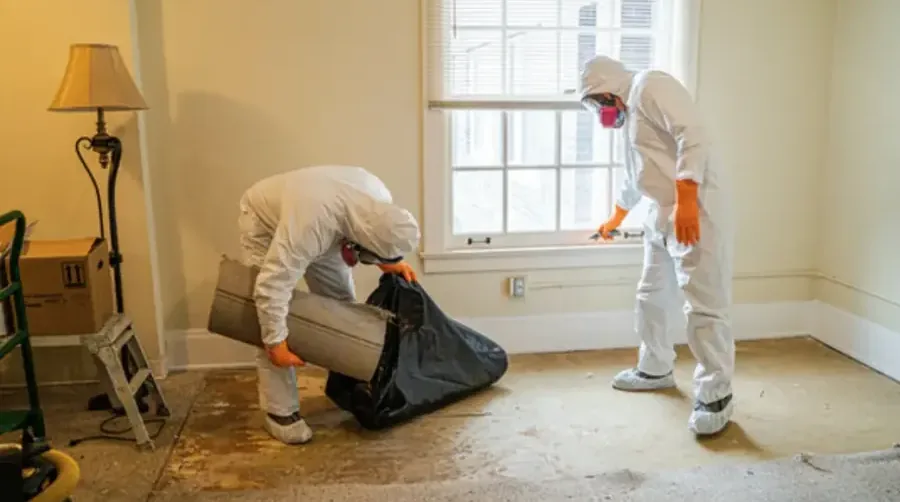
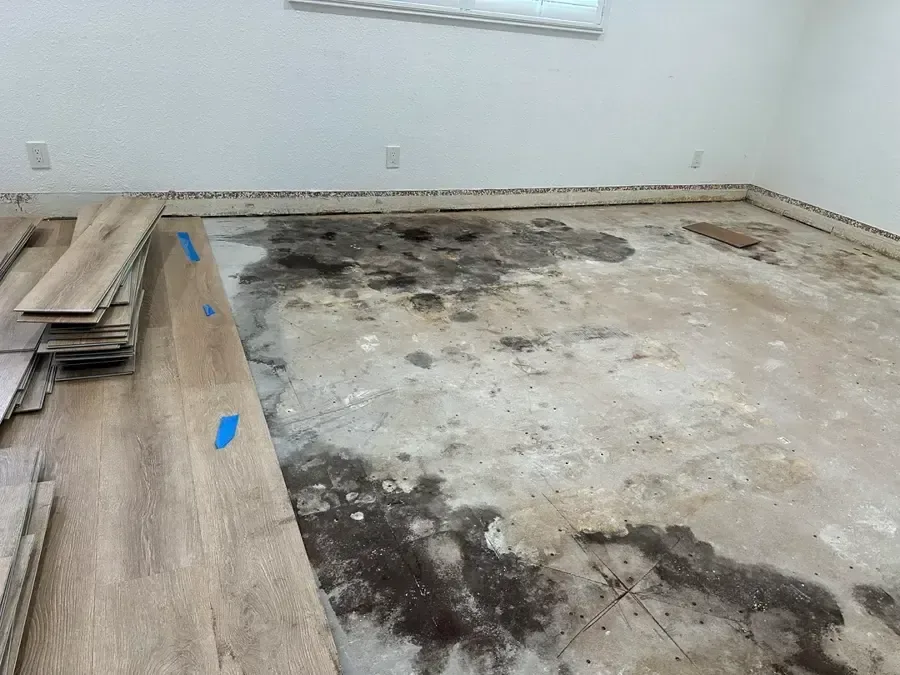
Carpet, pad, insulation and the lower part of wet drywall are cut out and bagged. Hard surfaces and framing are cleaned and treated with an antimicrobial.
- Porous materials removed rather than cleaned
- Hard surfaces washed and treated
- Framing and subfloor cleaned before drying
- Waste bagged and carried out without crossing clean rooms
Health and Safety After a Backup
Sewage exposure carries a real health risk, so anyone who has been in contact should wash with soap and clean water and change clothes. Children, older adults and anyone with a weak immune system should stay away from the affected rooms until the cleanup is done.
Clothing and shoes that went through sewage are bagged and washed separately from the rest of the laundry.
- Wash hands and skin with soap and clean water
- Bag and wash soiled clothing separately
- Keep food and dishes away from the affected area
- Throw out any food the water may have touched
Drying and Checking Before Rebuilding
Once the contaminated materials are out, the area is dried with air movers and dehumidifiers. Readings are taken on the framing and subfloor and repeated until they return to a normal level, which is the job of structural drying.
Only after the readings are normal does rebuilding start. Rushing that step is how damp framing and lingering odors end up behind new drywall.
The wider range of sewage backup services follows the same order: containment early, removal of porous materials, drying with readings and a written record.
Protecting the Home Between Wet Spells
Wet weather is when seepage and overflow are most likely, so it pays to keep the household ready before the next one. A little preparation keeps a backup from turning into a long cleanup.
Know where the tank access and any cleanouts are on the property, and keep the Public Works contacts for business hours and after hours where everyone in the house can find them.
- Keep valuables and boxes off the lowest floors
- Know where the tank access and cleanouts are
- Keep the Public Works contacts handy for both parts of the day
- Watch for slow drains and gurgling sounds, which often come before a backup
Questions
Is a sewage backup always a problem with the town sewer?
No. A clog in the home's own drain can cause one too. The cleanup does not depend on the source, and a report to Public Works is sensible either way.
Can homeowners clean sewage themselves?
Sewage carries bacteria, so protective gear is required, and anything that soaked into porous materials needs full removal rather than surface cleaning.
What if a backup happens at night?
The Public Works page lists separate contacts for after hours sewer emergencies, so the right contact depends on the time of day.
Does a backup always mean the carpet is lost?
Carpet and pad that touched sewage are usually removed because they cannot be made safe again. Hard flooring can often be cleaned and kept.
What does inflow and infiltration mean?
It means groundwater entering the sewer system during wet weather. The Town is rehabilitating manholes to reduce it.